
They’ve been seen on the Balearic beaches of Mallorca and Ibiza this summer already.
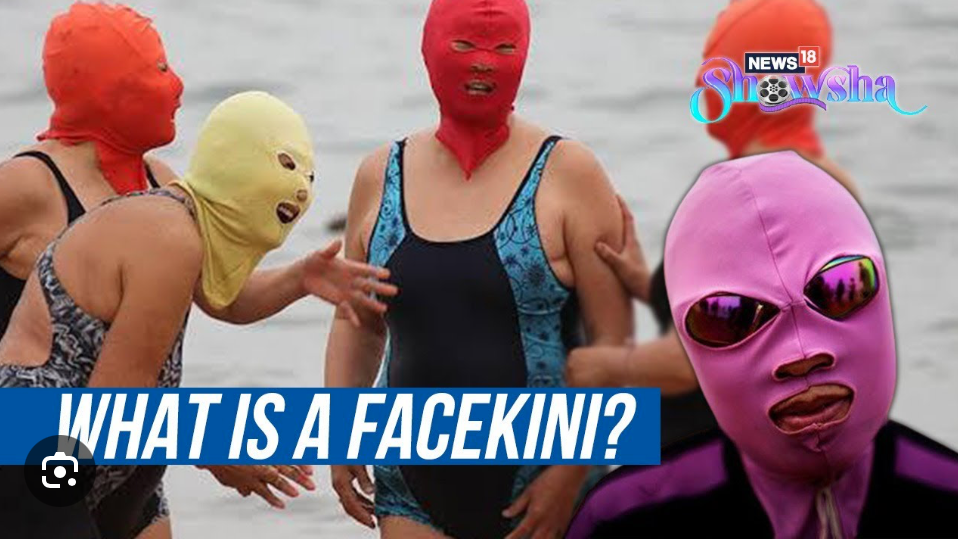
The facekini is a mask designed for swimmers and beachgoers that covers the head and face, revealing only the eyes, nose, and mouth. The mask is made of the stretchy fabric commonly used in bathing suits, and comes in different colours and patterns.
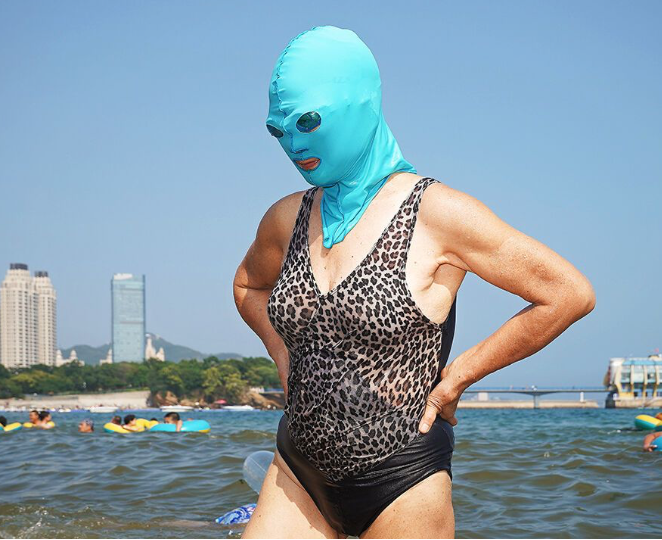
I for one am all over this, because as I’ve got older the sun has really started to affect the skin on my face, with sun spots, impetigo and premature aging.

Think full-face, balaclava-style masks made from UV-resistant swimsuit fabric.
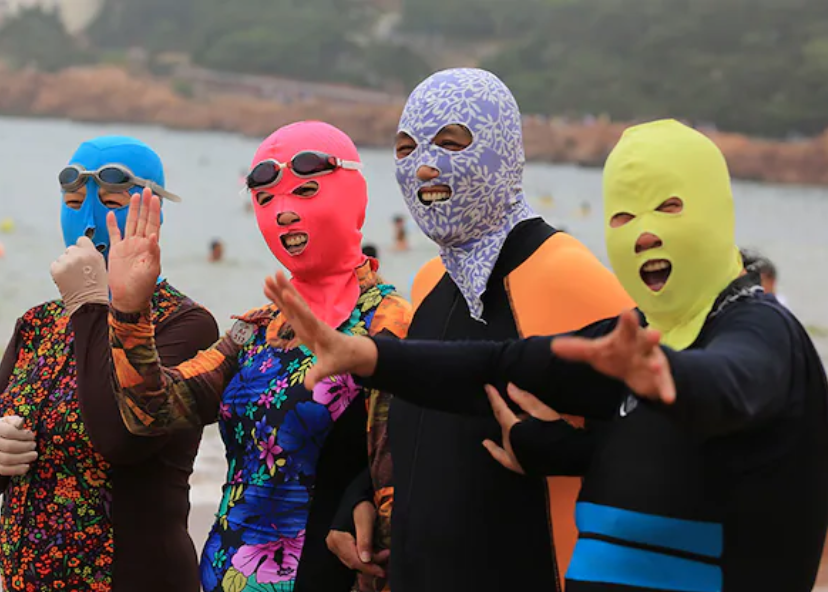
Why are they worn?
- Sun Protection: They offer maximum defense against damaging UV rays and prevent unwanted tanning. In East Asia, fair skin is deeply prized, and these masks prevent tanning and sun spots.
- Environmental Hazards: Originally invented in Qingdao, China, in 2004, they are also widely used by beachgoers to protect the face from jellyfish stings, crabs, and biting insects.
- Cultural & Fashion Impact
While they initially gained global notoriety as a quirky “bizarre beach trend,” they have become highly mainstream. What started as a functional item—frequently worn by older swimmers at the beach—has evolved into a major fashion accessory. High-end labels and street-style brands now feature facekinis as a core part of urban outdoor wear.
Find them at:
PITT Lingerie & Swimwear Palma
Primor
SEPHORA MALLORCA
Or online at:
Amazon
Ali Express
Temu.
All around £10.


